Showing posts with label environmental conservation. Show all posts

Sunday, August 7, 2011

SEA TURTLES NEED US: Relocating Nests on St. Catherines Island, Georgia


THE UNIVERSE IN MINIATURE: SEA TURTLE EGGS
SEA TURTLE HATCHLING (art by Hallelujah)

Hallelujah for SEA TURTLES and SEA TURTLE EGGS! Aren’t they mysteriously fascinating creatures? Hallelujah for SCIENTISTS like Gale Bishop, who are passionately dedicated to assisting SEA TURTLES survival by monitoring their nests on St. Catherines Island, Georgia, four-and-a-half months every year. 113 precious sea turtle eggs were laid in the 159th nest on Friday night, July 30, 2011, when I was there with my Chiboogamoo. And I got to help protect them!
Gale Bishop

While my Chiboogamoo was researching alligator dens on the island’s inland ponds, I accompanied Gale and a visiting team of paleontologists from Montana State University (MSU) to the coastal dunes to relocate the eggs from this 159th nest. The focus of the MSU scientists was to study modern sea-turtle nest structures in order to increase their understanding of fossil ones. On this sizzling hot day with temperatures soaring into triple digits Fahrenheit, we were glad to guided by an expert. Gale has been monitoring sea-turtle nesting for 21 years through the St. Catherines Island Sea Turtle Conservation Program.
Dan Lawver

Once we were at the site of nest 159, Gale guided Dan Lawver, an MSU paleontology graduate student, to carefully remove its surface sand. This nest had been discovered and marked earlier in the morning at sunrise when Gale and his intern patrolled the beach looking for the iconic trackways made by a mother sea turtle. To lay eggs, she must leave the safety and fluidity of her ocean home to pull herself forward with her flippers on this foreign land of her birthplace. Her movements recorded in the sand look cumbersome, persistent, and rhythmic. Dan worked slowly with the shovel edge, eventually revealing the damp oval outline of the place where the mother turtle had deposited her eggs, then compacted the sand on top of them. Tentatively, with his fingers, Dan loosened and removed handfuls of the sand until he uncovered the bevy of more than 100 eggs.
AN EASILY RECOGNIZED PATTERN: Sea turtles leave a distinctive trackway.  This particular sea turtle did not succeed in making a nest. Imagine her pulling herself along the beach, using her flippers, only to turn around and leave mission unaccomplished. (photo by Gale Bishop)

Successful Sea Turtle Trackway: The mother sea turtle who journeyed from the ocean to the dune succeeded in making a nest. (photo by Gale Bishop)


These eggs must be moved for two primary reasons. First of all, mother sea turtles are laying eggs too close to the shoreline, and the forces of the ocean will erode the nest away. Then there are the predators. In addition to moving nests to higher ground away from the surf, protective screening is placed over the nests to protect them from persistent predators such as raccoons, ghost crabs, and feral hogs.

Predator Raccoon: This opportunivore was captured at the site of a sea turtle nest. (photo by Gale Bishop)

Predator Ghost Crab: Eating is essential for every living thing. Ghost crabs prey upon sea turtle nests. (photo by Chiboogamoo)

Predator Hogs: Hogs do not belong on the Georgia barrier islands. They destroy habitats and love to eat turtle eggs. Reproducing at such rapid rates, hog populations on the islands are impossible to control. (Photo by Gale Bishop)

Urged on by Gale to participate in this magnificent conservation effort—even though I was slightly nervous about damaging the eggs—I began scooping them out of the nest by twos and putting them in a large, red three-gallon bucket. Each time I touched an egg, I worried that my fingers would puncture it. Instead, the egg yielded to my touch, allowing me to ease it out of its earthy sandy womb. How did the yolk of the unborn turtle stay intact? Each egg seemed a tiny miracle of Mother Nature!

WOW!: Hallelujah holding a sea turtle egg! (photo by Gale Bishop)

ELEMENTAL LIFE:  Sea Turtle Eggs Re-nested. (photo by Chiboogamoo, photoshopped by Hallelujah)

Once reburied in a much safer location in the dunes, these white durable leathery eggs, a little larger and softer than ping-pong balls, will hatch in approximately 54 days. The hatchlings will erupt from this human-made “protected” nest with a clear and direct sense of how to reach the sea. Each newly minted sea turtle will leave a small undulating trackway perpendicular to the beach, something that won’t be repeated again until its reproductive maturity twenty years later. And that will only happen if the 3-inch-long female hatchlings escape all the hazards of being a small animal in a very large and competitive ecosystem. Is it really possible that out of every ONE THOUSAND sea turtle hatchlings, just ONE survives to reproductive age?
SEA TURTLE LIFE! (photo by Gale Bishop)

Of the 113 eggs from nest 159, one egg was collected for DNA testing. Gale calls this a necessary “sacrifice” so that the mother turtle can be identified. For example, on one short stretch of the beach, the DNA testing revealed that the same mother sea turtle had nested six times. Do the math! One mother, six nests, each nest comprising approximately 113 eggs—that’s 678 hatchlings from just one turtle ambling towards the sea! Perhaps one of them might make it to maturity! But then again, what percentage of the nested eggs will actually hatch? That’s another story, for another time.


Has the sea turtle always faced such great odds at survival? Who knows! When we consider deep time—sea turtles have been in existence since the Early Cretaceous, for more than 100 million years. If they have survived this long, won’t they continue? Simply answered, NO! Today, their nesting habitats are severely threatened by human development, invasive species, and the changing environment, such as global warming. Because of these conditions, all species of sea turtles are on the endangered list. Sea turtles need our assistance if they are to continue being on this glorious and wonderful planet.
HATCHLING CRAWLWAY: The babies knew which direction to go. Did they feel the call of the sea? See their trackways? (photo by Gale Bishop)

Over the 21 years that Gale has been monitoring the sea-turtle nests on St. Catherines Island from mid-May to the end of September, he has come across and relocated 2,355 nests and thus assisted approximately 142,672 sea turtles at the beginning of their life cycles. He has helped train 256 teachers in St. Catherines Island Sea Turtle Conservation Program, therefore impacting the sea turtle conservation knowledge of 270,227 students.

Hallelujah for EDUCATORS and SCIENTISTS like Gale, and the SEA TURTLES they serve. Hallelujah for STUDENTS who are our FUTURE SEA TURTLE CONSERVATIONISTS. Food for thought—if it takes ONE    THOUSAND or more hatchling sea turtles for ONE to become a mother, how many students educated in sea turtle conservation does it take to produce a sea turtle protector?

That’s COFFEE WITH HALLELUJAH! Write me and tell me why so many of us just absolutely love sea turtles and feel connected to them! SOUL BLOG with me and explain to me the mysteries that entwine us with these magnificent creatures of the sea!

SUNRISE AT ST. CATHERINES ISLAND: Sunday morning on July 31,  Chiboogamoo and I went out with Gale on his morning patrol to check for newly made nests or hatchling crawlways to the sea.

ACKNOWLEDGEMENTS: Hallelujah sings praises of Gale Bishop, professor, paleontologist, ichnologist, educator, and turtle conservationist extraordinaire. He is generous and gentle in his science instruction. He really loves people as much as he loves sea turtles and his black cat, Abbie. And, he can bake the best dinner rolls ever! Thanks to the Montana State University crew, who let me tag along. And, as always, thanks to my Chiboogamoo, who takes to me the Georgia Coast. 
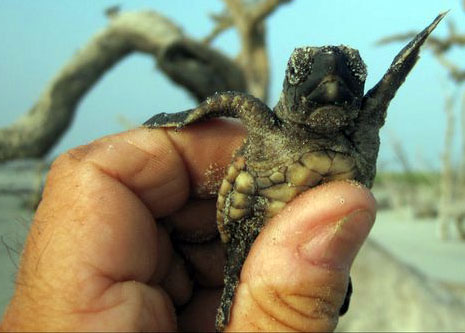
HALLELUJAH FOR BABY SEA TURTLES! (photo by Chiboogamoo)


Saturday, October 30, 2010

CREATIVELY LINKING HEART and SCIENCE through ART: My Love of Australian Mammals

HALLELUJAH PILGRIMS! HALLELUJAH for ALL LIVING CREATURES, especially monotremes and marsupials! Marsupial moms are resourceful mammals, raising their young from embryos to young juveniles outside their wombs in pouches! Envision the comfort of being tucked inside a warm blanket of maternal flesh and fur with an ample supply of milk for sustenance! HALLELUJAH for the CREATIVITY of this DESIGN!

 HALLELUJAH encourages ALL of you PILGRIMS to enthusiastically participate in the ACT of CREATION by SEEING with your own unique vision. Look deep inside objective reality. Penetrate the “obvious” that your physical eyes see. Perhaps, there is a baby marsupial tucked inside! My ART results from SEEING with my own vision, my “inner” eyes acquired from a lifetime of experiences! Right now, I will turn my spirit seeking radar on marsupials and one monotreme to share with you how I creatively envision them.

Here in the United States, where I live, we have one modest marsupial, the opossum. Unfortunately, most of us become acquainted with this shy pinkish gray animal when we see one dead on the roadside. However, other world citizens are more fortunate. On the continents of South America and Australia, there is an abundance of marsupials ranging in size from a mouse to a kangaroo. My Chiboogamoo, who is sitting across the table from me, explains that the occurrence of marsupials on these two continents is a result of their origination on the super continent of Gondwana more than 100 million years ago! Thank you Chiboogamoo! Praise SCIENCE! Praise intelligent SCIENTISTS!

Chiboogamoo, my faithful guide and companion, stops to figure out where we should go next at one of the nature parks in Tasmania!

And Praise how CREATIVITY and SCIENCE (and artists and scientists) inform each other! Look at these endearing Australian marsupials—a BILBY, TASMANIAN DEVIL, QUOLL, and a monotreme—the PLATYPUS—I have depicted here. In reality, these animals have a “fetching” physical appearance. So it was easy to paint images of them that most viewers respond to favorably—often with murmurs of delight, I might add. They are thrilled to be “engaged” with a marsupial or a monotreme! In addition to experiencing curiosity about the natural history of these critters, viewers also express a connection to me! Why? Because of the way I have folded in my perception and feelings based on my experience, viewers get the opportunity to SEE me—HALLELUJAH—simultaneously with the animal! I AM in the ART!

And I believe that the “me” in the art along with my “subject” has POWER. I believe that it is possible that my VISIONARY ART can link world citizens to SCIENCE—in this instance—to the science of marsupials and monotremes and the precariousness of their longevity. We are powerful actors on this world stage when we merge our HEARTs and HEADs.

Here is what I want you to know about the TASMANIAN DEVIL: The Devil, a curious carnivore, lives on the breathtaking mountainous island of Tasmania, south of the Australian continent.  

During our week-long  trip in Tasmania during a cold April day (it is fall in Australia then) in 2006, my Chiboogamoo and I had the good fortune to observe Tasmanian Devils in close proximity at the East Coast Nature World 7 miles north of Bicheno.

Bone crunching and yowling, the TASMANIAN DEVIL is in terrible danger now from tumors mysteriously occurring on its face. These fatal cancerous facial tumors are demolishing huge populations of the Devil. Up until now, this cat-sized black and white beast has kept Tasmanian roads free of road kill, but now as its populations decline, road kill is left unattended or consumed by other animals like birds, which end up getting hit by oncoming traffic!


The BILBY, a grayish pink floppy-eared marsupial, is nocturnal and omnivorous. This “cute” marsupial has been chosen by Australian environmentalists to replace the iconic Easter Bunny for two reasons. First of all, by getting profiled for a holiday celebration, the BILBY, which like the TASMANIAN DEVIL has waning numbers, might become better known to the public.  A chocolate Bilby and wine--perfect for an Easter celebration in Victoria, Australia!

The PUBLIC has the power to take steps to preserve the BILBY. Second, the Bunny Rabbit represents an ecological hazard to the Australian continent. Rabbits brought by the British have thrived and multiplied, causing extensive damage to vegetation and displacing native animals. Has anyone seen the movie, “Rabbit Proof Fence”? Thousands of kilometers of fences crisscross the continent, attempting but failing to stop the rabbit’s invasion. Embrace the BILBY as the new icon for Easter celebrations! A marsupial is worthy symbol for fertility and the promise of new life!


The QUOLL is a very attractive nighttime carnivore. Yet, most of the QUOLLs that I have seen have been stuffed ones in museums of natural history!  Yes, this spotted marsupial is also endangered! 

Loving animals of all kinds, my Chiboogamoo found them alive and dead in museums and parks. Isn't the Quoll an amazing beast!

Although my Chiboogamoo tells me that animals’ disappearing from this earth is the natural order of things (Extinction has been going on for millions of years.), I take in a big breath and emit a sigh. How many more animals will become extinct in my lifetime? Which extinctions are “natural” and which ones are human made? Yet all is not gloom and doom about QUOLLS. I have seen a family of black and white spotted QUOLLS at a nature center in Tasmania! And they were amazing!

Finally, I will celebrate the PLATYPUS, which is only one of two monotremes living today (The echidna is the other existing monotreme.. A monotreme is an egg-bearing mammal). My Chiboogamoo and I were fortunate enough to see some of these furry duckbilled mammals frolicking in their natural environments in Tasmania. We also tracked a male PLATYPUS along a stream in the Healesville Sanctuary, a nature center, in Victoria, with Murrindindi, an Aboriginal tracker. Murrindindi entertained us with the romantic adventures of the particular PLATYPUS we tracked that day, and its image lingers in my imagination today. The PLATYPUS is threatened because of changes in its environment, but it is not endangered.

HALLELUJAH for these magical animals from Australia and for all living creatures! HALLELUJAH wishes that all of you PILGRIMS will travel your JOURNEYS delighting in both your HEART and HEAD! How beautiful is the MYSTICAL and how thrilling the KNOWN! My Chiboogamoo suggests I conclude this blog by reminding ALL of US of our ancient lineage. Whether we are monotremes, marsupials or placentals, we ALL descended from the same source! We are ALL connected!


Friday, November 20, 2009

TO THE BAHAMAS: JOYFUL SOULFUL ART JOURNEY

Hallelujah EARTH! Hallelujah loves the natural world around her and knows YOU do too. Hallelujah dances, sings, and playfully celebrates the beauty of the land, sky, and oceans.

 One precious part of this earth resides southeast of the United States in the Atlantic, along the Bahamian platform. This island named San Salvador is the farthest island out there in the Atlantic, surrounded by coral reefs and at the “wall”, where the shallow aqua blue waters drop off into the deep, deep mysterious sea.

 San Salvador needs our love and attention! Its coral reefs are suffering from pollution, its waters are being over-fished, and the stately ancient sea turtles are disappearing.

 Hallelujah soulfully and joyfully believes all of us can make a difference in the actions we take each day. My life’s pilgrimage has taken me past the shores of this island, to its living, beating heart—its children.

 I have gone swimming with the children to look at the mermaid’s glass, to give names to sponges, corals, and fish. We have drawn the dolphins, spotted eagle rays, and the birds. We have added colors to these creatures and told stories about how each of us can protect them.

 As a way to continue to engage the children of San Salvador with the nature surrounding their homes, I am creating illustrations for the story, “The Misadventures of Maria the Hutia,” written by Ronald Shaklee, a geographer who has been visiting the island for decades. Ron’s main character is a hutia named Maria, an animal that scientists had thought was extinct. Happily it was not.  Scientists found that her kind was still thriving on some smaller pristine islands in the Bahamas. Hutias live! Hallelujah!

 In this image you see here, “To the Bahamas,” Hallelujah has invited Amber, a white tropic bird and one of the characters in Maria’s story to transport her and Wandjina to the Bahamas. We are journeying soulfully and joyfully. Observe that Wandjina is in the night, the rich darkness of the subconscious, and I am in the light. Another miracle that has happened is that I have sprouted Wandjina’s crown. My crown is more like pistils of a flower that I cherish for their beauty and potentiality.

 I am traveling into the unknown, and I am not alone. Hallelujah asks you to join her on this journey. We, Wandjina and I, are curious about you. We want to know about you and your journey. Inform us of your bearings. Likewise, we ask you to be curious about us, ask us questions, seek answers.

 That’s coffee with Hallelujah! Love you!

Saturday, September 26, 2009

HALLELUJAH--WE'RE NOT ALONE!


My vision is that we are not alone on our journeys. This image originated from talking with Jen Hilburn, the ornithologist on St Catherines, a barrier island off the coast of Georgia. 

In my desire to connect my art with my love of the environment, I urged her to tell me about her conservation work on the island. She told me about the plight of the American Oyster Catcher (AMOY), a beautiful black and white, orange billed migratory bird. 

It is no longer reproducing at a rate to sustain itself. Over time, unless we humans can help the AMOY, it will die out. Jen, like other ornithologists, are taking action to help this bird reproduce such as building artificial sand bars so it can build its ground nests and incubating eggs until they hatch.

When Jen saw my images of the AMOY with the guardian angels, she talked to me about being a scientist. Scientists do what they can. They are not angels, she said. When the scientists' actions fail, the birds will die. We can remain hopeful, and we can remain vigilant. Action must be taken. She was very serious.

I understood Jen. She wants all of us to take action to do what we can for the Earth that we live on. We shouldn't anticipate miracles. If all of us were more like Jen, the Earth would be a better place. We are not alone on our journey. I know that there are more people like Jen. And all the time, more of us are learning.

Let me know what you think about my painting. Even more important, tell me what you are doing to take care of the Earth? Can all of us be scientific guardian angels? That's Coffee With Hallelujah! Good night!